Log a crash day without spending a spoon
Post-exertional malaise can arrive a day or two after you overdo it, which makes the cause hard to see. Logging a short note every day, even on bad days, gives you the timeline that memory cannot.
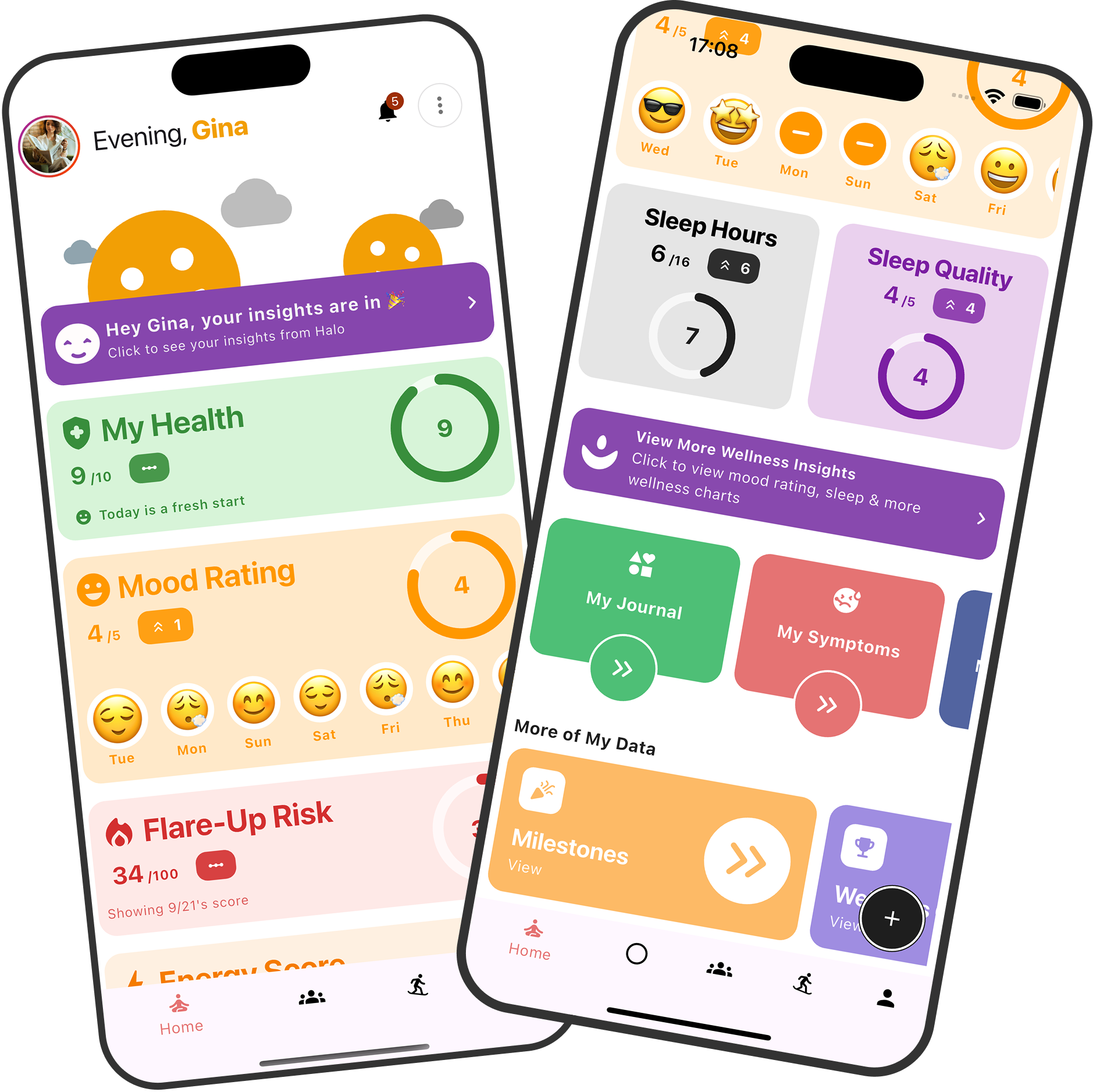
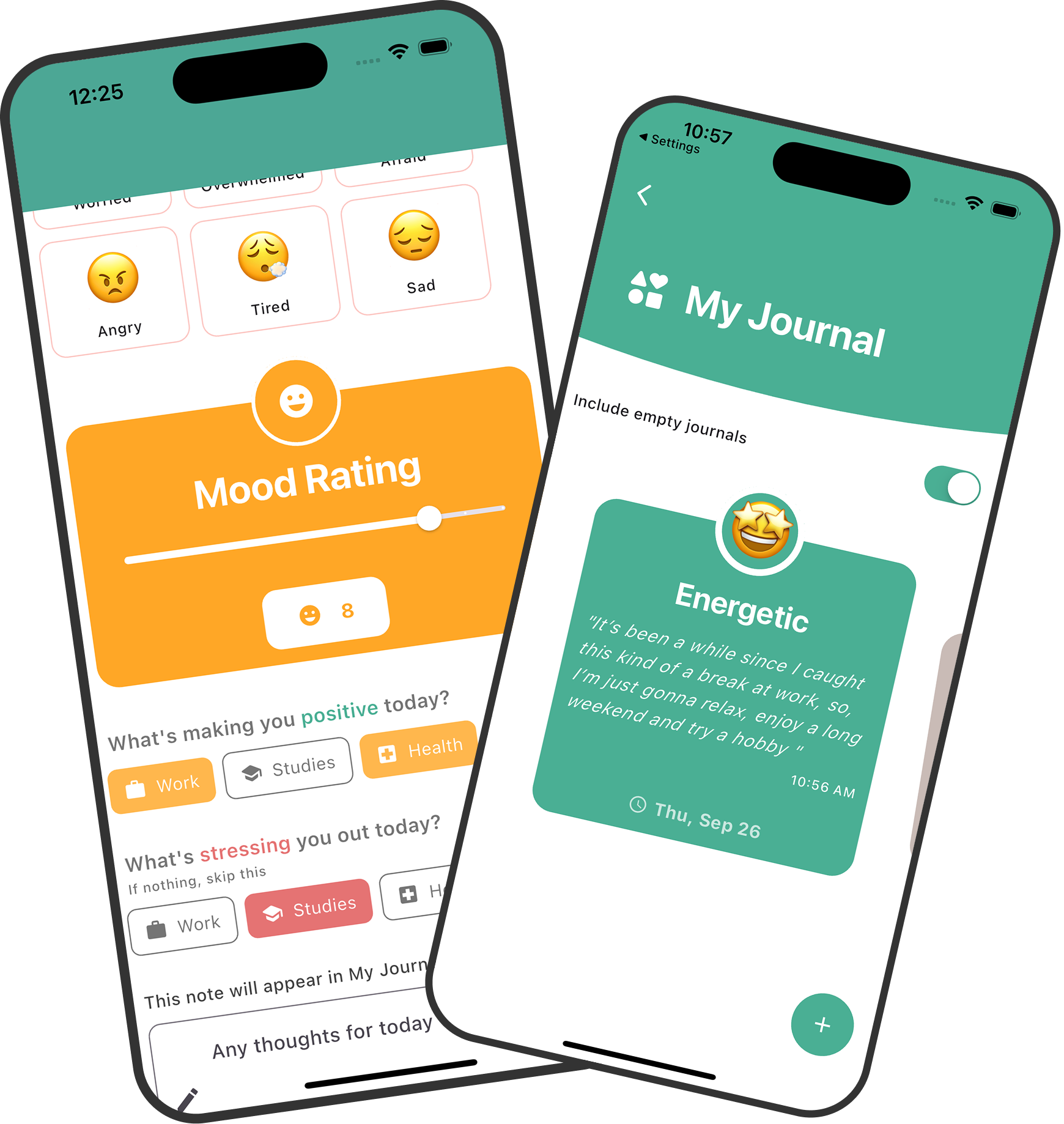
In Heylixir you rate your fatigue, add your symptoms and say what you did, by voice or tap. It takes seconds.
Energy and fatigue ratings with a short note
PEM, pain and other symptoms with intensity
Log by voice from bed on crash days
Spot what comes before your crashes
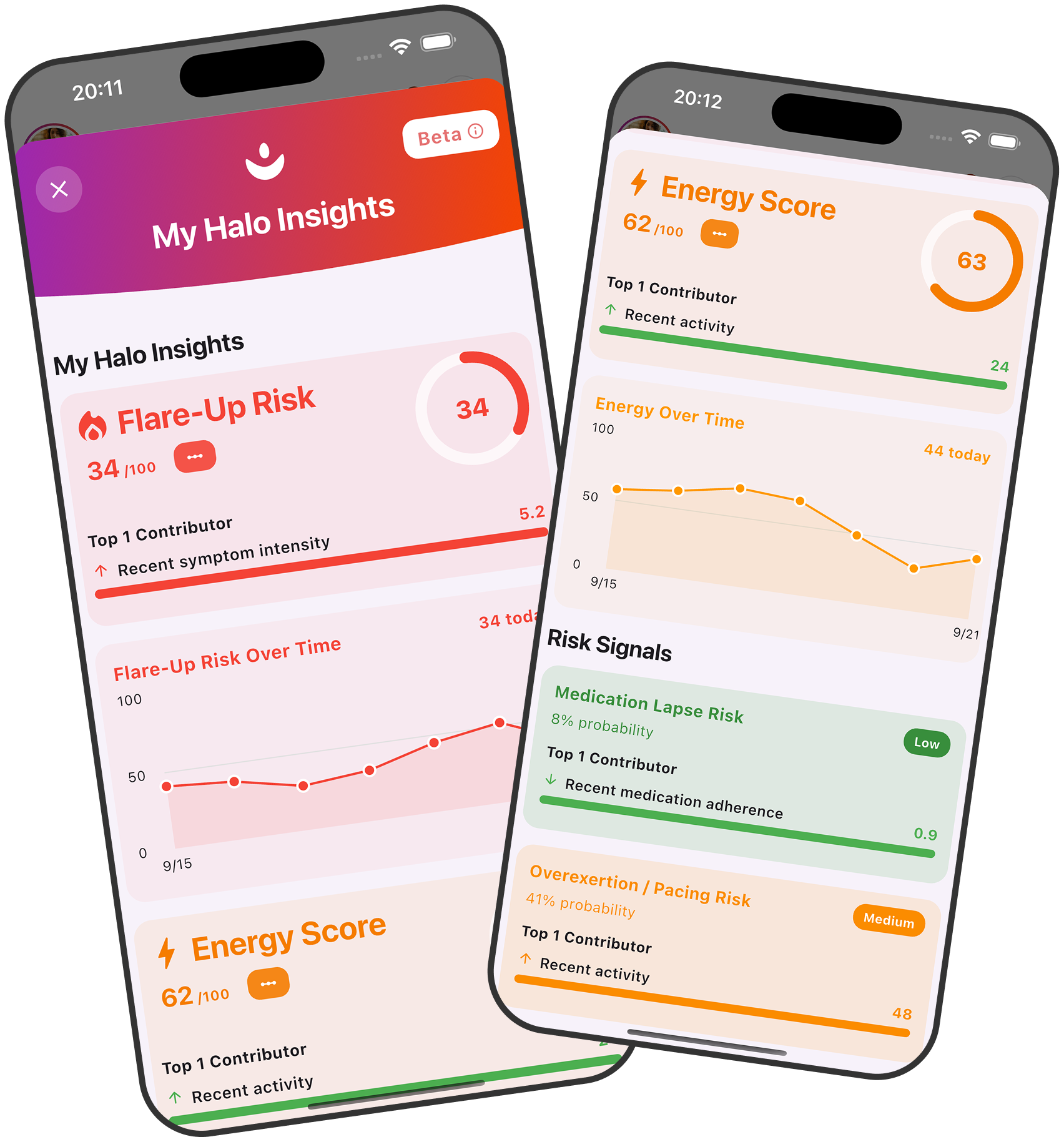
Because Heylixir keeps your energy, activity notes, sleep, mood, meds and symptoms together, you can look for what tends to come before a crash. Halo AI points out patterns in your own logs in plain language.
Patterns are not a diagnosis, but they help with pacing and give you concrete things to discuss with your healthcare provider.
Sleep and fatigue side by side
Activity and delayed crashes on one timeline
Patterns in your own logs, in plain language
Pace with more confidence
Pacing is personal. Knowing your usual energy, what costs you most and what helps you recover makes it easier to rest before the crash instead of after it.
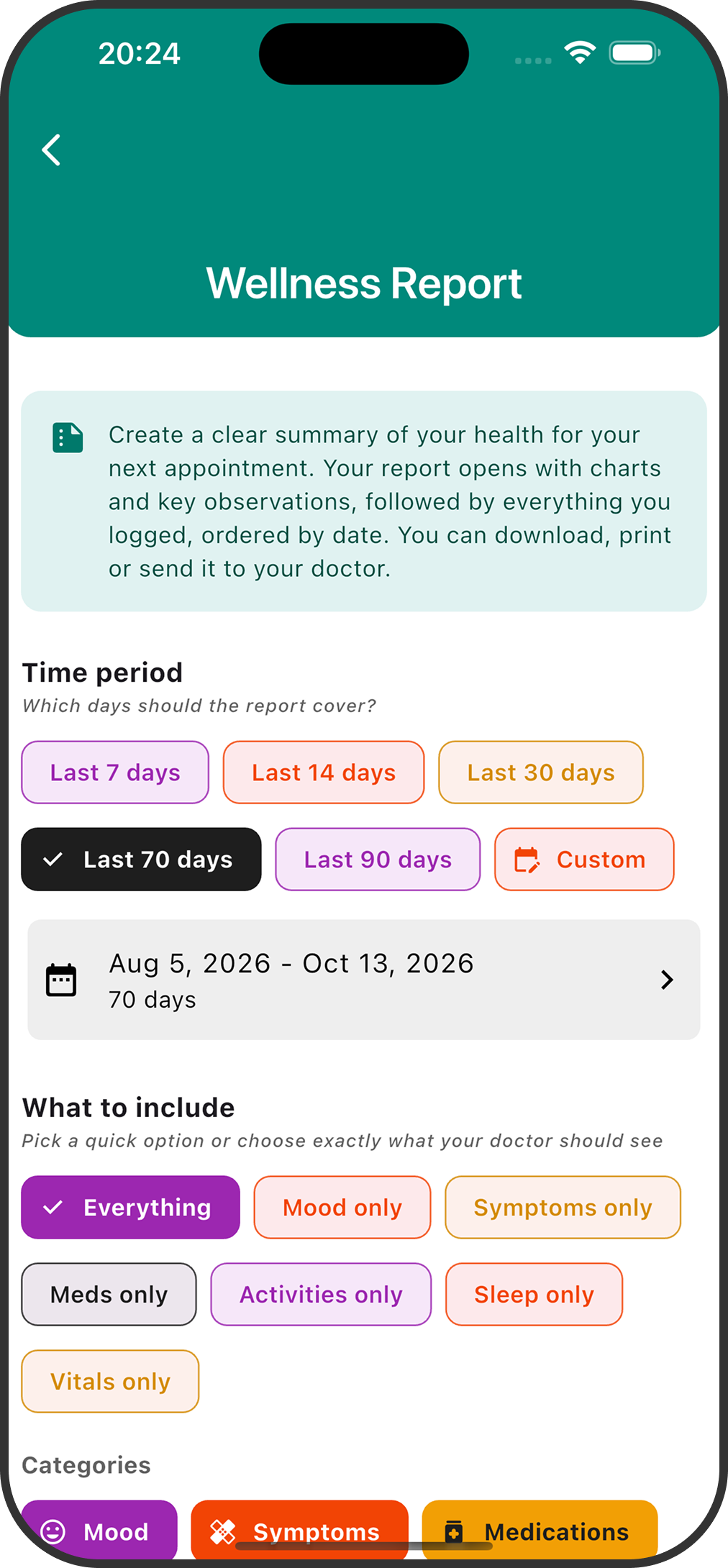
Read about [spoon theory energy tracking](/spoon-theory-energy-tracking/) if you plan your days in spoons, and bring a summary to appointments so your notes carry weight.

Log a crash day with your voice
On a crash day every interaction costs energy. Say how you feel in Heylixir and your voice note does the logging for you.
“Crashed after the shower, heavy legs, foggy, slept badly, took my meds, feeling low.”
Mood: low, drained
Symptoms: fatigue, heavy legs, brain fog
Medication: taken, noted with the time
Journal: your words, saved as today's entry
See how voice tracking works →
Ready to track your ME/CFS?
Try Heylixir and start logging ME/CFS symptoms, meds and mood in seconds, even by voice.