Challenges living with stress, depression, chronic condition, 9 to 5, studying

Know your spoons before the day starts

Spoonies already count their energy all day. Heylixir's energy tracking helps you know where your spoons stand, so you can plan, pace and say no without the guilt. It sits right next to your mood, symptoms, meds and journal, so you can see what spends your spoons and what gives them back.

Spoon theory energy tracking works best alongside voice symptom tracking, where you say how you feel instead of typing. A simple routine helps too: see how to track symptoms and medications. AI wellness insights then point out patterns over time, and a doctor summary makes appointments easier. For the bigger picture, see our pain & fatigue tracking guide.

Heylixir app screen where you track energy to know your spoons alongside symptoms and medications

Spoon theory, made simple to track

If you live with chronic illness, you probably know spoon theory: every task costs a spoon, and you start each day with a limited number. The hard part is that nobody tells you how many you have. You find out when you run out.

Heylixir's energy tracking is built to take the guesswork out of that. Check in with your energy and Heylixir helps you know your spoons, so your plans can match the day you actually have.

Know where your energy stands today

Plan around your spoons, not against them

Explain your limits with real numbers behind you
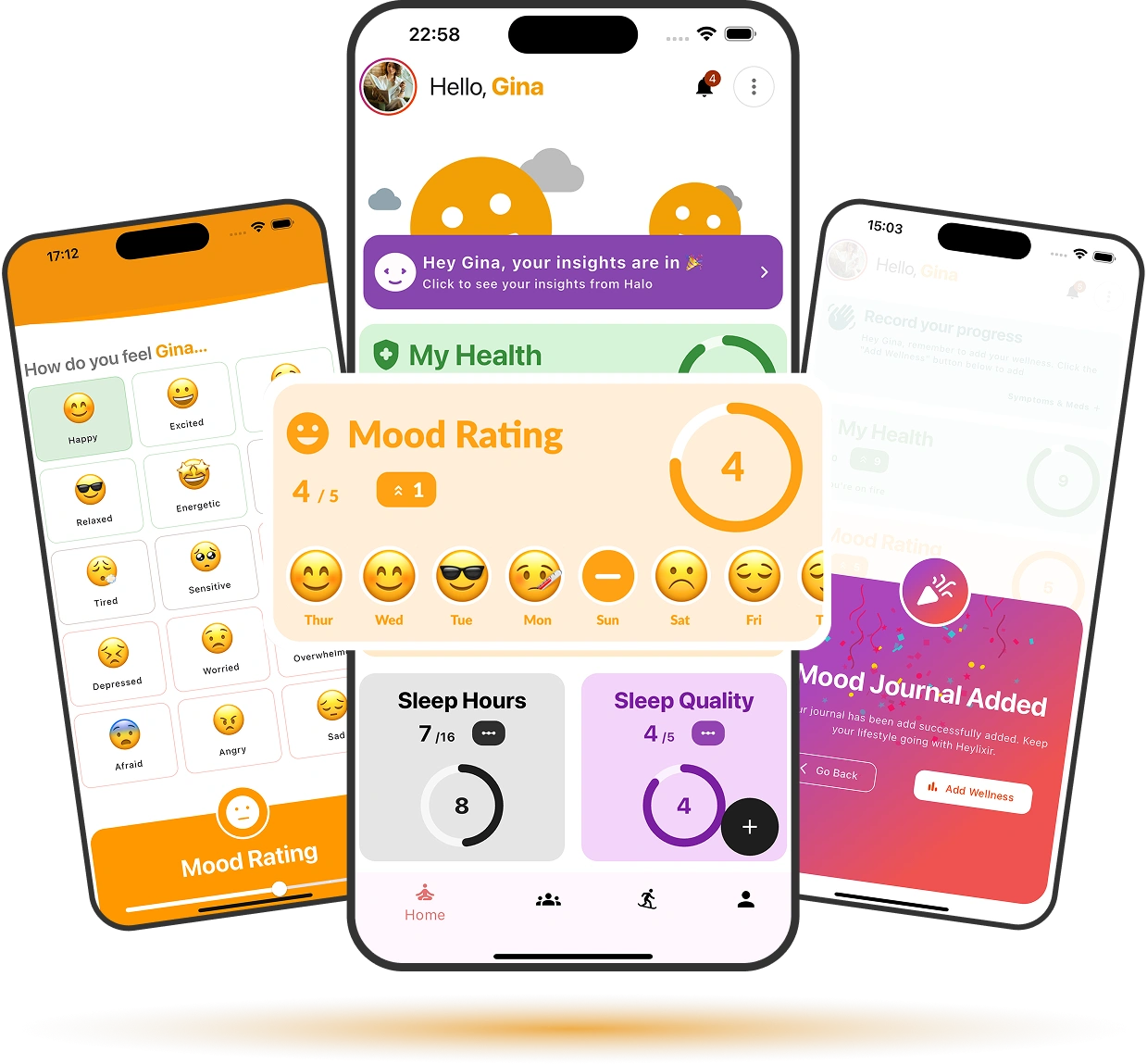
Heylixir app screens showing mood, symptom, medication and energy tracking for chronic illness

See what spends your spoons and what gives them back

Energy rarely changes on its own. Poor sleep, a flare, a stressful week, a late dose or a big outing can all play a part. Because Heylixir keeps your energy, symptoms, mood, meds and journal in one place, you can look back and notice what tends to come before your low-energy days.

Halo AI helps by pointing out patterns in your own logs in plain language, so you do not have to go through every entry on a foggy day.

Sleep and energy side by side

Symptoms and flares that come before a crash

Mood and brain fog alongside your spoons

Heylixir voice tracking screen for logging how you feel when you have no energy to type

Pace yourself without the guilt

Knowing your spoons is not about doing more. It is about spending them on purpose: resting before the crash instead of after it, spacing out busy days and saving energy for the things that matter to you.

Heylixir was built by a spoonie who understands that some days the kindest plan is a small one. Your tracker should make that easier, not add another thing to do. You can even log by voice when you are too tired to type.

Sources and further reading

The general health information on this page is based on the sources below. It is not medical advice, and Heylixir cannot diagnose or treat any condition. Ask a healthcare professional about your own situation.

Sources checked November 2026.

Ready to know your spoons?

Try Heylixir and start planning your days around the energy you actually have.

Think this could help a friend?

FAQ: Spoon theory and energy tracking

Spoon theory is a way of explaining life with chronic illness, created by Christine Miserandino. Each spoon stands for a unit of energy. Healthy people often have plenty to spare, but people with chronic illness have a limited number each day, and everyday tasks like showering, cooking or answering messages can cost spoons.
Heylixir's energy tracking helps you see where your spoons stand, so you can plan your day around them instead of finding out the hard way. Because Heylixir also keeps your symptoms, mood, meds and journal, you can look back and see what tends to spend your energy and what tends to give it back.
Symptoms tell you what your body is doing. Energy tells you what you can do about your day. Tracking both helps you spot crash patterns, pace activities and explain your limits to the people around you and to your care team.
It can help. When you can see how your energy usually moves across the week and what comes before a low-energy day, it is easier to space out busy days, add rest earlier and avoid the push-and-crash cycle. Pacing is personal, so use what you learn alongside advice from your healthcare provider.
No. Spoon theory is used by people living with many conditions, including fibromyalgia, ME/CFS, Long COVID, POTS, endometriosis, lupus, rheumatoid arthritis, multiple sclerosis and more. If your energy is limited and unpredictable, tracking it can help.
No. Heylixir helps you notice patterns in your own logs and insights are not a diagnosis or treatment advice. Always talk to your healthcare provider about changes in your health.
Yes. In Heylixir you just say how you feel and Heylixir logs your mood, symptoms, meds and journal for you. Read more about voice symptom tracking.
Yes. Tracking with Heylixir is meant to be easy, fast and painless, even on hard days. You can lie back, say a few words, give your entry a quick look and save it, with no forms to fill in.
Voice tracking supports around 100 languages. Accuracy may vary by language, accent and how clear your audio is, so give your entry a quick look before you save it. See the full list on our voice tracking page.
Yes. Voice tracking works offline, so you can log when you have no signal and your entry is there when you are back online.